“JWST observations and a model for the extremely luminous obscured quasar W2246–0526 at z=4.6”
Published in Monthly Notices of the Royal Astronomical Society
Posted on May 14, 2026
I am delighted to announce the publication of our research article “JWST observations and a model for the extremely luminous obscured quasar W2246–0526 at \(z\)=4.6” in Monthly Notices of the Royal Astronomical Society.
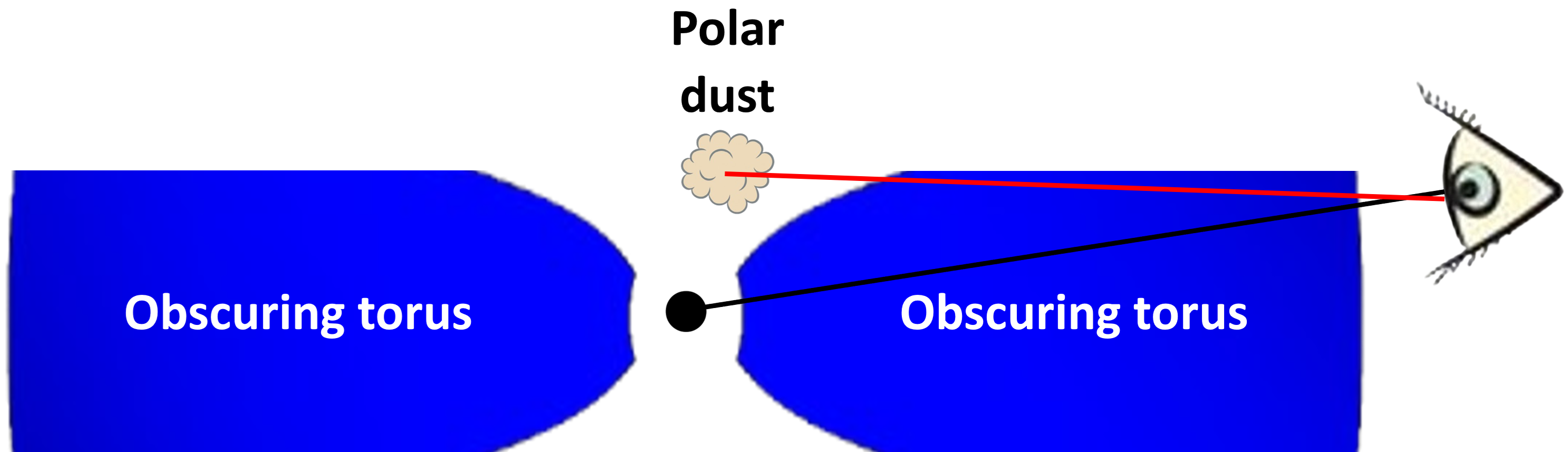
How did the Universe’s first galaxies grow enormous black holes so quickly? This study, combining observations from the James Webb Space Telescope with detailed modelling of its spectral energy distribution, takes a close look at one of the most extreme known objects, the galaxy W2246–0526, shining as brightly as hundreds of trillions of Suns just 1.3 billion years after the Big Bang. At its heart lies a black hole more than ten billion times the mass of the Sun. The analysis with SMART reveals a hot dust component likely located in the galaxy’s polar regions, which may be linked to powerful outflows driven by the quasar. This suggests the black hole is already influencing its host galaxy, offering a rare glimpse of how the first massive galaxies formed—and how their central black holes shaped their evolution. For further details, please read the article.
For this work we acknowledge support from the projects CYGNUS and CYGNUS+ funded by the European Space Agency.